Trello Status
Official service status for Trello components.
Live Domain Check
Check if Trello is down right now (trello.com). Run a live multi-region check to see whether Trello is offline for everyone or just you.
Get official Trello outage status updates, support links, and targeted troubleshooting steps in one page.
Checking reachability from multiple regions.
Trello incidents can show up as board load lag, missing card updates, or automation rule delays. This checker helps you identify service-wide issues before changing board config.
For Trello, incident signals are often feature-specific: Board loading works, but card create/update events starts failing for many users. Instability appears around automation execution during normal traffic. If this matches what you see on trello.com, it usually points to partial degradation instead of a full outage, so confirm with official status updates and a second-network retest.
Use official sources first, then social/community signals to estimate incident scope and speed of recovery.
Official service status for Trello components.
Official support resources for board, card, and automation issues.
Community incident confirmations and workaround discussions.
Real-time posts and official updates related to Trello incidents.
Official teams often post outage status updates and recovery progress through these social channels.
Recognizing these patterns helps you avoid false assumptions and escalate with better evidence.
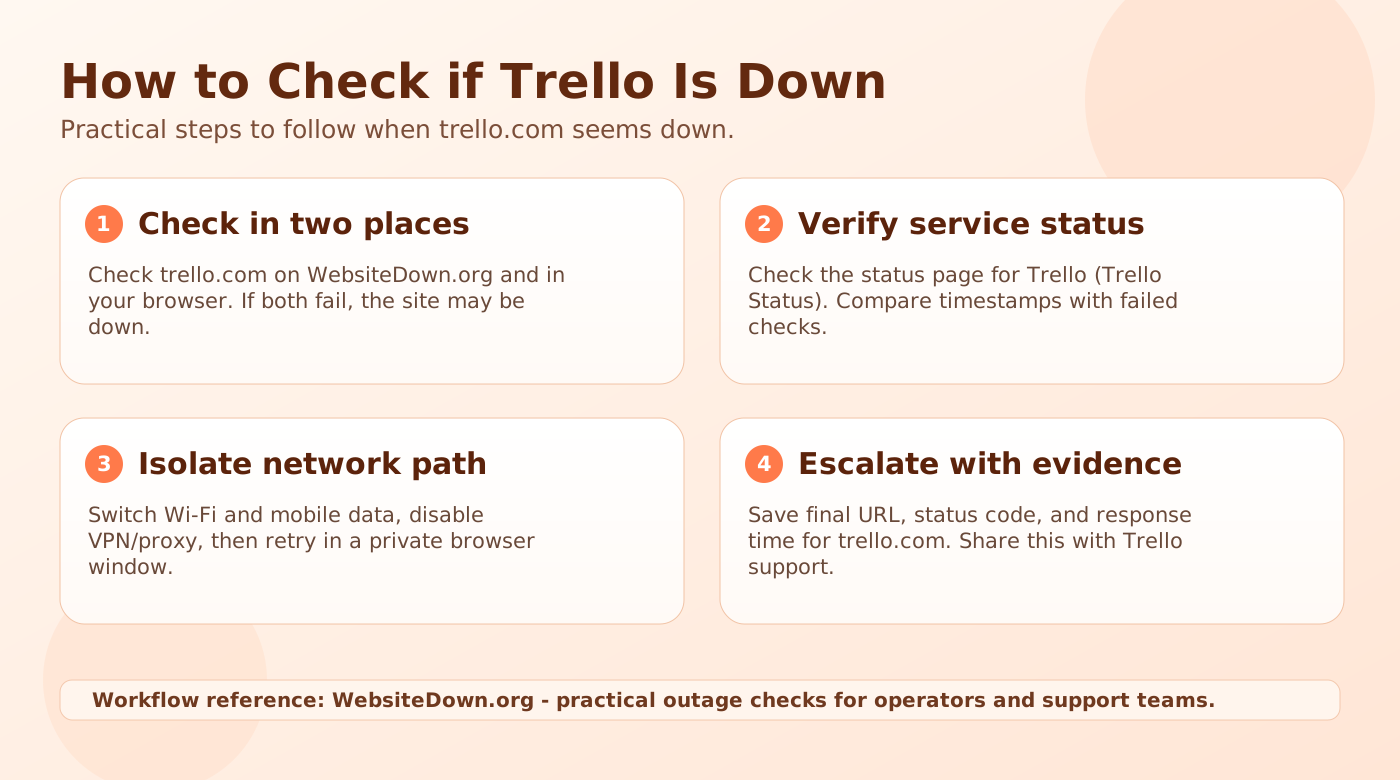
Practical steps to follow when trello.com seems down. Use this checklist to confirm whether Trello is down for everyone or only for you.
Run trello.com in WebsiteDown.org first, then open trello.com in your own browser. If results disagree, the issue is often local rather than global.
Check the official Trello service status page and compare timestamps with your failed checks.
Test related hosts such as www.trello.com, support.atlassian.com. If they work while trello.com fails, this points to a partial endpoint issue.
Capture final URL, status code, and response time for trello.com, then share those details with Trello support for faster triage and recovery.
Use these local troubleshooting steps after the down-check workflow when Trello seems broken only for you. This section focuses on app, browser, account, and network fixes.
Open trello.com in your current browser, then test in a private window or second browser. If only one session fails, the issue is usually local cache, cookie, or extension state.
Sign out and sign back in one time, then retry the failing action on trello.com. Avoid repeated password or security resets until you confirm this is not a broader Trello issue.
Temporarily disable VPN, proxy, private DNS, and filtering extensions. Then switch between Wi-Fi and mobile data to isolate route-level differences.
Save timestamp, device, network type, exact error, final URL, and status code. Use the check workflow above before contacting Trello support.
Run the automatic multi-region check on this page for trello.com. If most regions fail at the same time, Trello is likely experiencing a broader outage.
If only one or two regions fail, the issue is usually local to your route, resolver, device state, or account session. Recheck after 2 to 5 minutes and compare Wi-Fi with mobile data.
Use this order so you get reliable signal quickly:
Official dashboards are the source of record, but social channels can surface impact faster in the first minutes of an incident.
That usually means a route-specific or client-specific issue instead of full provider downtime. Common reasons:
Try a private window, switch networks, and compare with this page's regional result before making major local changes.
Use this quick triage sequence:
This keeps your troubleshooting efficient and avoids unnecessary account resets during provider-side incidents.